Quick Answer: Furniture is most likely to get damaged when it isn’t packed to handle shifting during transport. The safest approach is to clean, disassemble when practical, add the right protective layers, and secure each piece so it stays stable in the truck.
Why Proper Furniture Packing Matters More Than You Think
Most people focus on lifting and carrying, but that’s not where damage usually starts. The bigger risk begins after the furniture is loaded and the truck is in motion.
A piece can look protected at first glance, but if there’s not enough padding underneath, surfaces can still rub together as the load shifts. That friction is what often leads to worn finishes, scratches, and pressure marks.
Poor packing creates weak points throughout the load. By the end of the move, that can mean dents, scuffs, or loosened joints that were avoidable with better preparation.
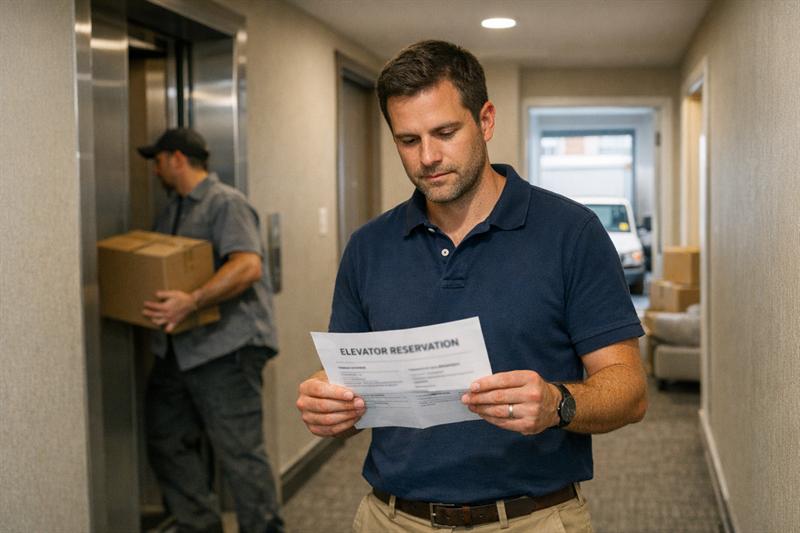
If you’re planning the move as a whole, it also helps to understand what to ask movers before hiring before deciding how much packing you want to handle yourself.
Essential Packing Materials for Furniture Protection
Every packing material serves a specific purpose. Problems usually start when materials are missing, used incorrectly, or applied in the wrong order.
- Moving blankets: create a soft barrier that helps reduce friction and absorb impact
- Stretch wrap: keeps protective layers in place and helps prevent shifting
- Bubble wrap: adds cushioning for fragile components and removable parts
- Corner protectors: help reduce pressure damage on edges and corners
- Mattress bags: protect mattresses from dirt and light moisture exposure
- Furniture sliders: help move heavy items with less dragging on floors
A common mistake is relying on plastic wrap alone. It can hold materials together, but it does not cushion impact. Without padding underneath, surfaces are still vulnerable to damage.
What to Use for Different Furniture Types
Upholstered pieces usually do best with a clean fabric cover or moving blanket before being secured. Wood surfaces need soft padding to help prevent scratches. Glass needs both cushioning and firm support.
Using the same method for every piece is where many DIY moves run into trouble. Different materials respond differently to pressure, friction, and moisture during transport.
Materials to Avoid
Thin plastic on its own offers very little surface protection and can trap moisture against some finishes. Newspaper may leave ink stains. Loose or poorly secured padding can shift during the move and expose vulnerable areas.
These problems do not always show up right away. In many cases, the damage becomes obvious only after the furniture has been in motion for a while.
For a more complete plan, follow a moving checklist to stay organized from start to finish.
Step-by-Step Guide to Packing Furniture for Moving
Effective furniture packing follows a sequence. Skipping steps or rushing through them makes each protective layer less effective.
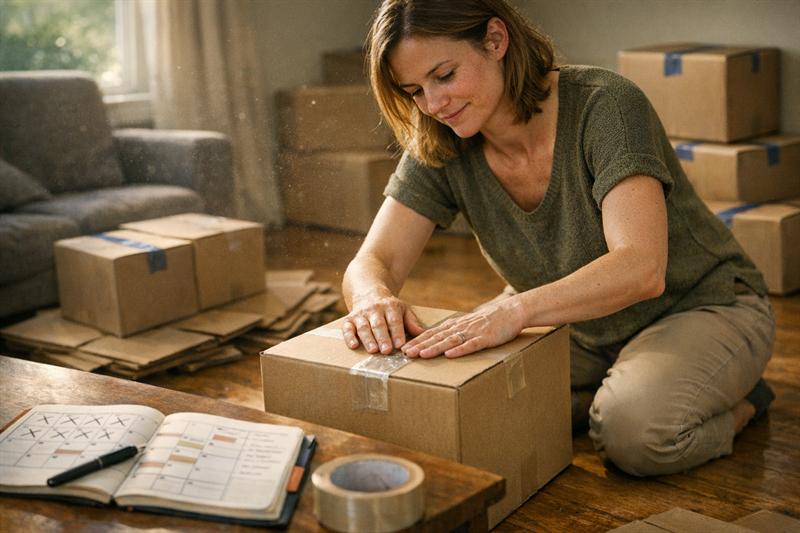
Step 1: Clean and Prepare Furniture
Dust, grit, and small debris can create friction points. When items shift in transit, those particles may scratch the surface.
A quick wipe-down also makes wraps, blankets, and tape hold more reliably and helps you spot any existing marks before the move.
Step 2: Disassemble What You Can
Breaking down large items reduces stress on frames and joints. It also makes pieces easier to wrap thoroughly and load more securely.
When this step is skipped, awkward shapes and extra weight can put pressure on weaker areas. That’s where cracks, loosened hardware, or instability can start.
Step 3: Wrap and Protect Surfaces
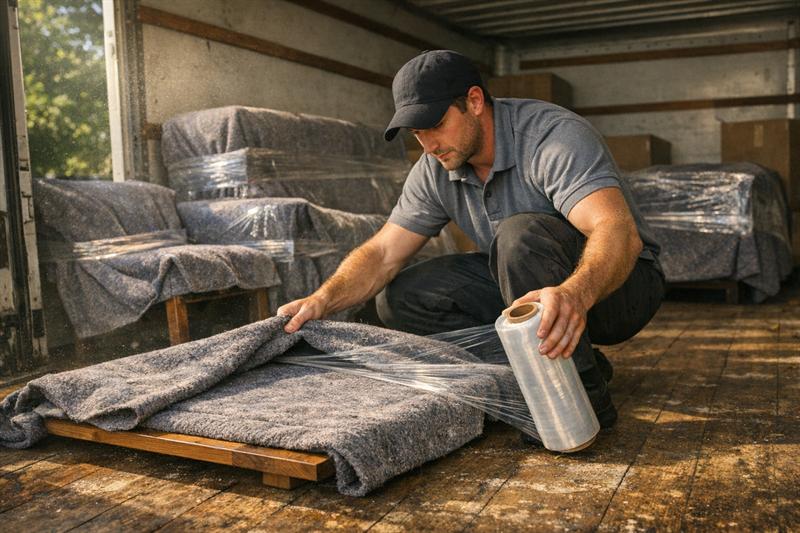
Protection works best in layers. Start with padding such as a moving blanket, secure it with stretch wrap, and reinforce edges and corners where needed.
This helps reduce direct contact between surfaces. Without that buffer, movement inside the truck can quickly lead to visible wear.
Step 4: Secure and Label Everything
If furniture has room to shift, it usually will. Even a well-wrapped piece can still get damaged if it moves around during transport.
Securing items helps limit that movement. Labeling hardware and disassembled parts also makes unloading and reassembly more straightforward.
To keep the process organized, follow a practical timeline like how to prepare for moving day.
How to Pack Specific Types of Furniture
Different materials respond differently to pressure, moisture, and movement. Packing methods should reflect that.
Sofas and Upholstered Items
Use a clean, breathable layer before applying stretch wrap over the outside. This helps protect the fabric while reducing direct contact and trapped debris.
Sealing upholstery too tightly without a fabric barrier can hold in moisture and lead to stale odors, especially during longer moves or storage.
Wood and Antique Furniture
Use soft moving blankets and avoid placing plastic directly against delicate finished surfaces when possible. Wood can be marked by pressure, friction, and trapped moisture.
Many surface marks come from hard contact points, exposed corners, or wrap that was pulled too tightly against the finish.
Glass and Fragile Pieces
Remove glass panels or shelves when possible and wrap them separately. Use both cushioning and a more rigid layer of support to help reduce flexing.
Leaving glass attached can create stress points. During transport, that added strain increases the chance of cracks or breakage.
Mattresses and Beds
Use a mattress bag to protect against dirt during the move, and keep the mattress upright when practical. Bed frames should be disassembled and hardware stored in a labeled bag.
Dragging a mattress or forcing it into a tight space can shorten its lifespan and make it harder to set up properly at the destination.
Common Furniture Packing Mistakes to Avoid
- Skipping disassembly, which can increase strain on joints and hardware
- Using materials that do not provide enough cushioning or support
- Applying too much or too little wrapping, which reduces protection
- Leaving items unsecured, allowing movement during transport
- Ignoring weight distribution, which can make the load less stable
Most preventable furniture damage starts with one or more of these issues.
When It Makes Sense to Use Professional Packing Services
Some moves are harder to manage than they first appear. Large furniture, tight spaces, and limited time all make proper packing more difficult.
It’s common for packing plans to start strong and then get rushed as moving day gets closer. That’s usually when protective steps are skipped and consistency drops.
Professional packing services are designed around preparation, protection, and load stability. The goal is not just to wrap furniture, but to pack it in a way that holds up during transport.
If any of the following sound familiar, it may be worth getting help:
- Furniture that is large, heavy, or difficult to disassemble
- Narrow hallways, stairs, or complicated access points
- Limited time to pack everything properly
- Concerns about protecting valuable or delicate items
At that point, a more structured approach can make the move smoother and help reduce avoidable damage.
Key Takeaways
- Furniture damage usually happens during transport, not while lifting
- Layered protection helps reduce friction and pressure
- Disassembly often improves both safety and packing quality
- Different materials call for different packing methods
- Rushed packing increases the chance of avoidable damage
Conclusion
Furniture damage is rarely random. In most cases, it comes back to how items were packed, protected, and secured before the move.
When protection is incomplete or inconsistent, movement inside the truck can lead to scratches, pressure marks, or loosened parts that are frustrating to deal with after the fact.
At Goliath Moving, packing is treated as part of the moving process, not as a separate afterthought. Materials, protective layering, and loading strategy work together to help reduce movement and protect each piece in transit.
If you want help avoiding the common problems outlined here, you can request support through Goliath Moving and plan your move with the right packing approach from the start.
Frequently Asked Questions
What is the best way to protect furniture when moving?
The most effective approach is to use layered protection, such as moving blankets, padding, and stretch wrap, to reduce friction and movement. For larger or more complicated moves, professional packing can also help keep protection consistent across the entire load.
Should furniture be wrapped in plastic or blankets?
Usually both, in that order. Blankets provide cushioning, while stretch wrap helps hold the padding in place. Plastic alone does not protect against impact and may trap moisture against some surfaces.
How do you pack wooden furniture without scratching it?
Wrap it in soft moving blankets and avoid direct plastic contact with delicate finished surfaces when possible. That helps reduce pressure points and protect the finish during loading and transport.
Is it better to disassemble furniture before moving?
In many cases, yes. Disassembly can reduce weight, awkward angles, and stress on joints, while also making pieces easier to wrap and move safely.
How do you move large furniture without damaging walls or floors?
Use sliders, padding, and slow, controlled movement. Planning the path ahead of time also helps reduce tight contact points and unnecessary dragging.
What materials are needed to pack furniture for a move?
Common materials include moving blankets, stretch wrap, bubble wrap, corner protectors, mattress bags, and sliders. Each one helps address a different risk during the move.