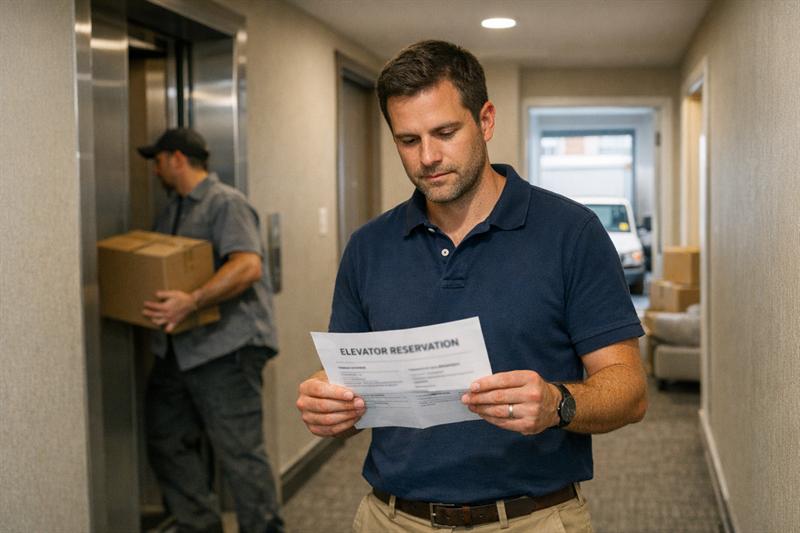

Quick Answer: A moving checklist in Ontario works best when it follows a clear timeline, usually starting 6–8 weeks before your move and covering booking, packing, address changes, and moving-day logistics. Most moving problems come from timing gaps and missed steps, not the move itself.
How to Use This Moving Checklist
This checklist follows the way moves usually unfold, and the sequence matters. Booking too late, packing without a plan, or delaying utilities can create avoidable problems that carry into moving day.
Start at your current timeline stage and work forward step by step. Skipping ahead often means circling back later to deal with something that was missed.
8 Weeks Before Moving: Planning & Booking
- Set your moving date
- Research and book movers
- Create a moving plan
Set Your Moving Date
Your moving date sets the pace for everything else. In Ontario, end-of-month and weekend dates are usually in higher demand. Waiting too long can limit your options and make the rest of the planning process feel rushed.
Research Moving Companies in Ontario
This step is easy to delay while packing takes priority, but that often leaves less time to compare options properly.
Focus on companies with clearly explained services, consistent reviews, and local moving experience. If you are not sure what to look for, review how to choose a reliable moving service before booking.
Booking earlier usually gives you more flexibility with dates, timing, and service options.
Create a Moving Plan or Binder
Disorganization usually starts when details are spread across emails, notes, and text messages. Keeping everything in one place helps you stay clear on quotes, schedules, and key contacts.
6 Weeks Before Moving: Declutter and Organize
Sort and Downsize Your Belongings
This stage often takes longer than expected. Putting off decisions here can compress the rest of the move into the final weeks.
The more you keep, the more you need to pack, carry, and unpack. That affects time, effort, and cost.
Start Gathering Packing Supplies
Running out of boxes or packing materials midway through the job slows progress and makes it harder to stay organized.
Have supplies ready before you begin. For a smoother process, review these packing and preparation tips to avoid common slowdowns.
4 Weeks Before Moving: Address Changes & Utilities
- Update your address with key services
- Schedule utility transfers
- Set up mail forwarding
Update Your Address in Ontario
This step is easy to underestimate. Missing even one account can lead to missed payments, lost mail, or service interruptions.
Handle banks, insurance, subscriptions, and government services together. Spreading this task across several weeks makes it easier to overlook something.
Transfer or Set Up Utilities
Hydro, water, gas, and internet should be scheduled ahead of time. Leaving this late can mean arriving to a home without essential services ready to go.
This becomes especially important when your closing or move-in timeline is tight. Early scheduling helps keep the move predictable.
2 Weeks Before Moving: Start Packing
Pack Non-Essential Items First
Start with anything you do not use every day. Storage areas, seasonal items, and decor are good places to begin.
Delays often become obvious at this stage. When packing starts too late, everything gets pushed into the final days, which usually leads to rushed decisions and weaker organization.
Label Boxes Strategically
Labeling affects more than unpacking. It also helps the move run more efficiently.
Vague or missing labels can slow unloading and create confusion from room to room. Clear room labels and priority markings help keep boxes going to the right place in the right order.
1 Week Before Moving: Final Preparations
Confirm Moving Details
Reconnect with your moving company and confirm timing, addresses, access points, and any special instructions. Small gaps at this stage can create delays on moving day.
If something is unclear now, it is better to sort it out before the truck arrives.
Prepare an Essentials Box
This should cover your first 24 hours in the new home. Without it, basic items can end up buried in boxes and make the first night more stressful than it needs to be.
If your move already feels disorganized, this is the time to tighten the plan:
- You have not booked a moving company
- Packing has not started or is only partly done
- Utilities or address changes are still incomplete
- You are unsure how moving day will run
At this stage, delays can start to stack up. Getting support in place early can make the final week easier to manage.
Moving Day Checklist
- Prepare the home before movers arrive
- Stay available during the move
- Complete a final walkthrough
Before the Movers Arrive
All packing should be finished and pathways should be clear. That helps the crew work efficiently from the start.
During the Move
Stay available to answer questions and give direction. Clear instructions around fragile, high-priority, or set-aside items help avoid confusion.
Final Walkthrough
This is where overlooked items are usually found. Closets, storage spaces, cabinets, and garages are the most common areas to miss.
After the Move: Settling Into Your New Home
Unpack Strategically
Focus on essential rooms first. The kitchen, bathroom, and sleeping areas should be set up early.
Trying to unpack everything at once usually creates clutter and makes it harder to settle in.
Update Remaining Accounts and Services
There are often a few updates left over after the move. Taking care of them early helps prevent follow-up issues later.
Printable Moving Checklist (Quick Reference)
- 8 weeks: book movers, set date, plan
- 6 weeks: declutter, gather supplies
- 4 weeks: update address, set up utilities
- 2 weeks: pack, label boxes
- 1 week: confirm details, prepare essentials
- moving day: execute and verify
- after move: unpack and finalize updates
Common Moving Mistakes to Avoid
- Booking movers too late
- Underestimating packing time
- Poor labeling systems
- Forgetting utilities or address updates
- No clear moving-day plan
These issues can compound quickly. What starts as a small delay can turn into scheduling problems, added costs, or unnecessary stress.
Conclusion
Most moving problems come from gaps in planning and timing. When key steps are delayed or skipped, the process becomes harder to manage and harder to correct later.
A checklist keeps the move structured, but follow-through is what makes the difference. If key steps are already behind, the priority is to regain control of the process quickly.
Goliath Moving helps coordinate the logistics that often cause delays, from scheduling to moving-day execution. If you want a clear plan in place, the next step is to request a quote.
Key Takeaways
- Timing plays a major role in how smooth a move feels
- Delays early in the process create more pressure later
- Utilities and address updates should be handled in advance
- Clear labeling and organized packing improve moving-day flow
- Structured coordination helps reduce common moving issues
Frequently Asked Questions
When should I start planning a move in Ontario?
Planning usually starts 6–8 weeks in advance. Starting later can reduce flexibility and add pressure to key decisions.
What should be included in a moving checklist?
A complete checklist should cover booking movers, packing, address updates, utilities, and moving-day coordination.
How do I change my address in Ontario when moving?
Update your address across government services, financial accounts, insurance, and subscriptions. Handling it in one round helps reduce missed updates.
What utilities need to be set up before moving day?
Hydro, water, gas, and internet are usually scheduled in advance so the home is functional when you arrive.
How long does it take to pack a house?
Packing often takes longer than people expect, especially without a plan. Delays are more likely when packing is left to the final weeks.
Do I need professional movers or can I move myself?
That depends on your timeline, budget, and the size of the move. For heavy items, tight schedules, or more complex moves, professional movers can make the process more manageable.